Sacred Geometry
From Giza's φ-flirting slopes to Chartres' compass-drawn everything, sacred geometry claims certain proportions — the golden ratio, π, √2, the mandala grid — carry meaning, and that ancient builders encoded them deliberately. This lens highlights the sites with the strongest geometric claims, rings the 30th parallel where an odd number of major sites cluster, and (select any site) draws golden-ratio distance rings to reveal which other sites fall on φ-scaled circles.
a spectrum. Mandala temple plans (Borobudur, Khajuraho, Angkor) and Gothic geometry (Chartres) are documented design method. Giza's π/φ and the Parthenon's golden ratio are contested readings of real proportions. Number-hunting beyond that mostly finds what it brings. The 30°N cluster depends on which sites you count, and it needs no mystery (habitable latitudes, old civilisations' geography) — but it is still a fine thing to look at.
Draw sacred geometry on the globe
Opens the globe with this lens switched on across all 42 sites. Stack other lenses to see where theories agree.
42 sites in this theory
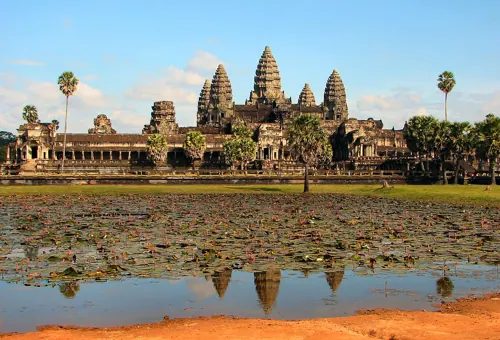
Angkor Wat
Mannikka's cubit analysis is sacred number made architecture — the strongest modern academic case for encoded cosmic measure.
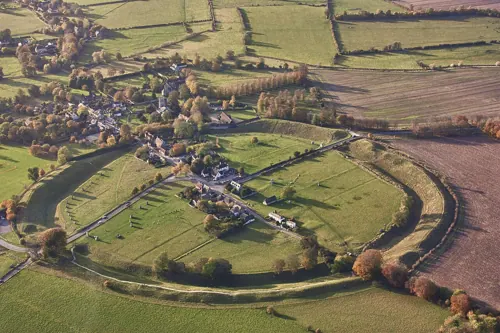
Avebury
Michell's 'Dimensions of Paradise' derives a canon of sacred number from Avebury's circle geometry.
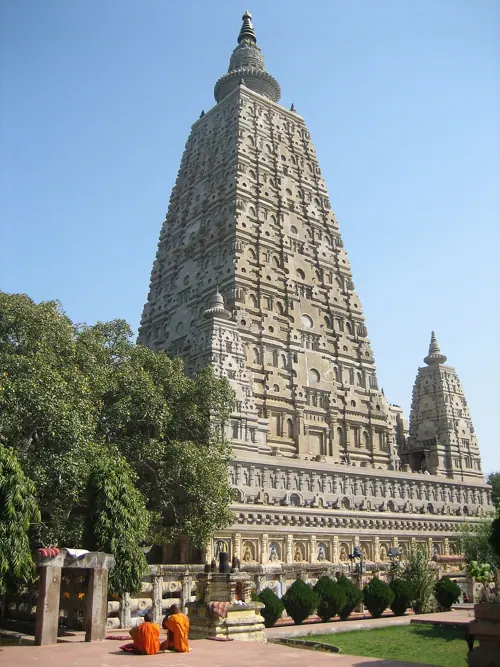
Bodh Gaya
The vajrasana is Buddhism's own 'navel of the world' — the axis mundi as a point of consciousness rather than stone.
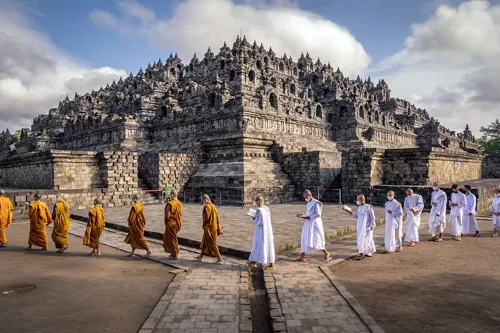
Borobudur
The clearest built mandala on Earth — its plan is literally the meditation diagram it teaches.
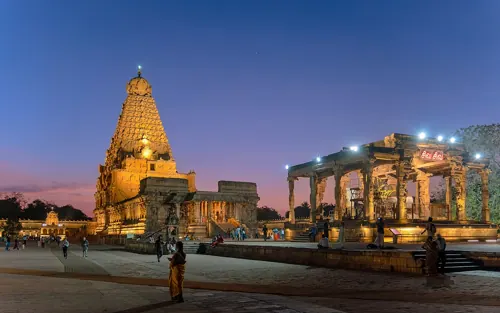
Brihadeeswarar Temple
Pure pyramidal proportion carried through thirteen storeys without a correction, in a material that punishes error.
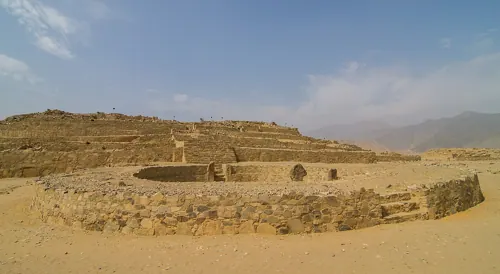
Caral
Sunken circular plazas against rectangular platforms: the circle-square dialogue that recurs worldwide.
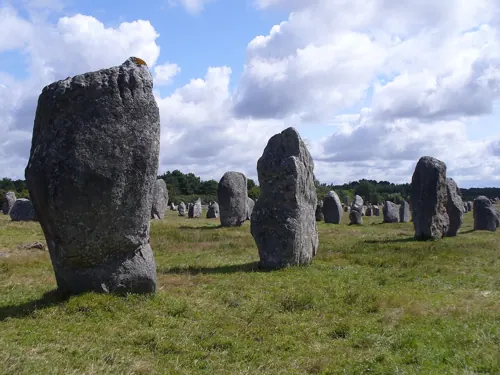
Carnac Stones
Thom's surveys claimed a standard 'megalithic yard' (0.829 m) used across Britain and Brittany — statistical debate continues.
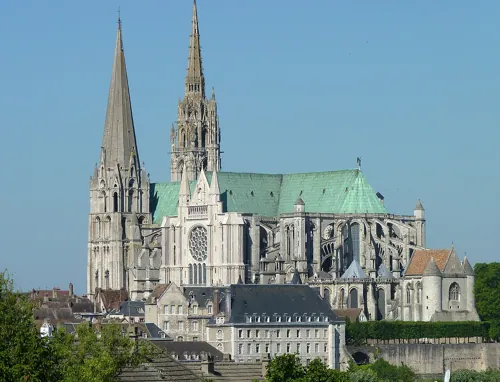
Chartres Cathedral
The masterwork of applied sacred geometry — its proportional system is documented in the stone itself.
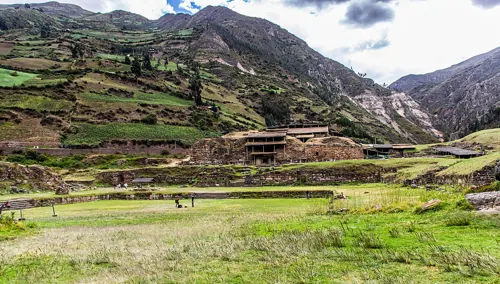
Chavín de Huántar
Temple plan is a nested set of squares and crosses echoing Andean cosmological quadripartition.
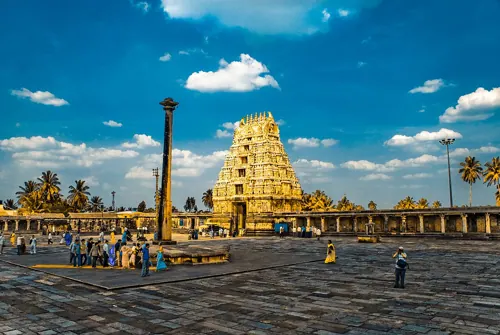
Chennakeshava Temple, Belur
Lathe-turned profiles mean a rotational tolerance held by hand, which is a different kind of precision from the usual megalithic argument.
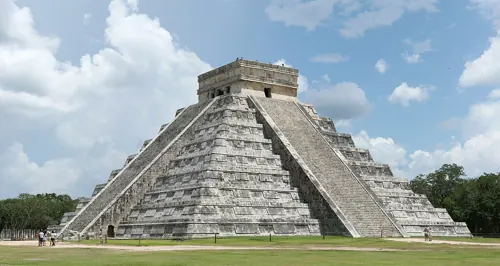
Chichén Itzá
The pyramid encodes the 365-day Haab calendar in stone, with nested platform geometry echoing the 52-year Calendar Round.
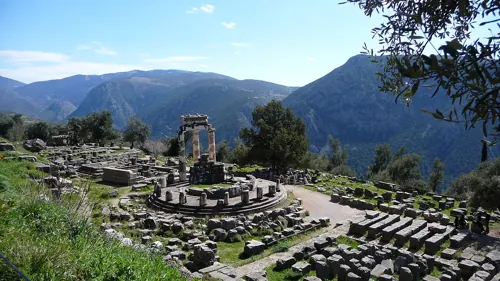
Delphi
Proponents claim treasury and temple placement at Delphi follow harmonic proportions.
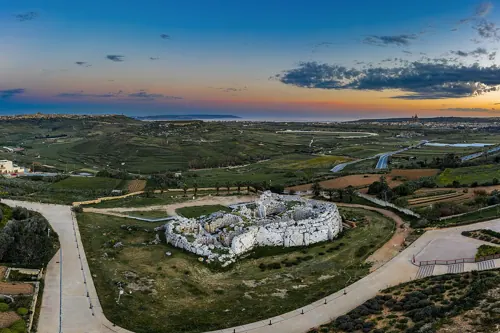
Ġgantija & the Malta Temples
Temple plans built from lobed circles suggest a rope-and-peg geometry tradition centuries before Egypt.
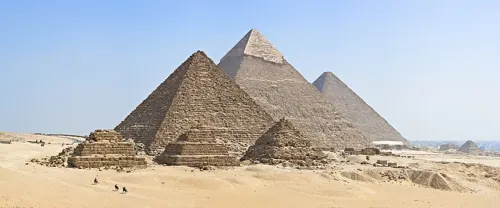
Giza Pyramid Complex
The canonical case: π and φ ratios, the 'squared circle', and seked geometry all appear in its proportions. Whether by design or by-product of measuring with rolling drums is the core debate.
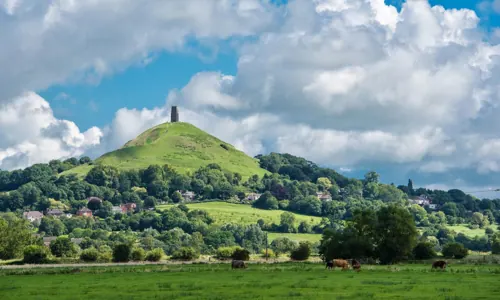
Glastonbury Tor
Katharine Maltwood's 'Glastonbury Zodiac' (which she said she discovered in 1925; published 1934) claimed a 10-mile wheel of landscape effigies surrounds the Tor.
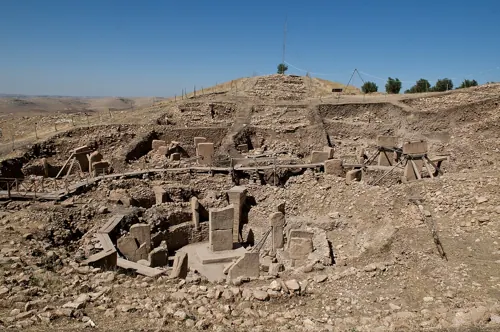
Göbekli Tepe
2020 research (Haklay & Gopher) found the three main enclosures form an equilateral triangle — hinting at a single planned design.
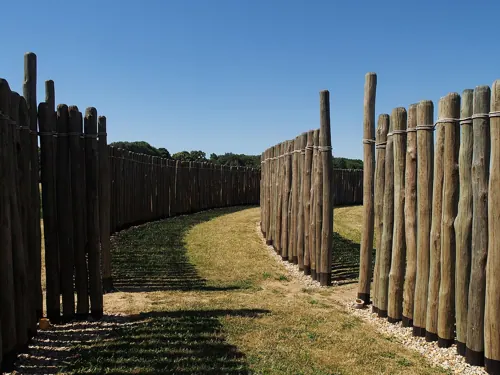
Goseck Circle
Circle-and-gate design repeated across some 140 enclosures suggests, to proponents, a shared geometric canon in 5000 BCE Europe.
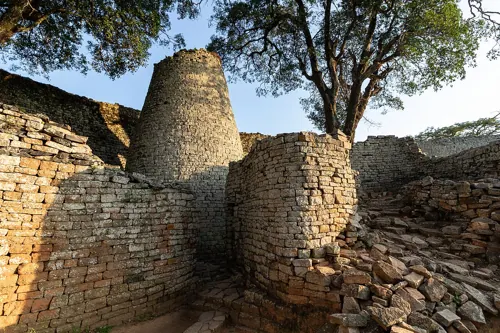
Great Zimbabwe
The Great Enclosure's curves follow the granite landscape rather than imposed axes — an architecture of flow, not grid.
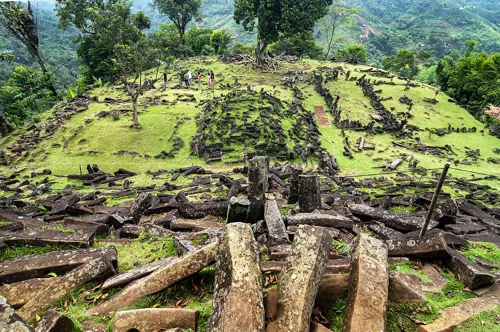
Gunung Padang
The natural hexagonal basalt columns give the site an eerie 'engineered' look that fuels its mythology.

Ise Grand Shrine
Sacredness located in proportion and ritual process, not material permanence — geometry as verb, not noun.
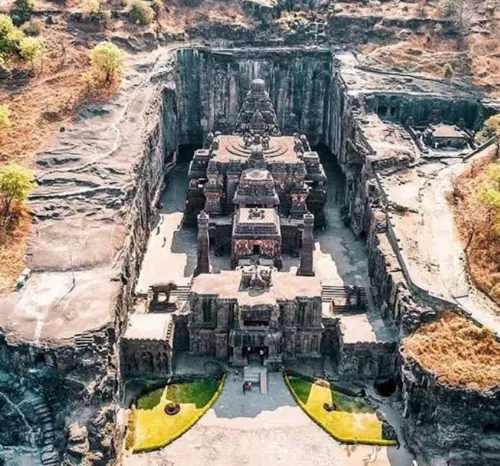
Kailasa Temple, Ellora
The plan follows Dravidian temple proportion despite being released from rock rather than assembled to a line.
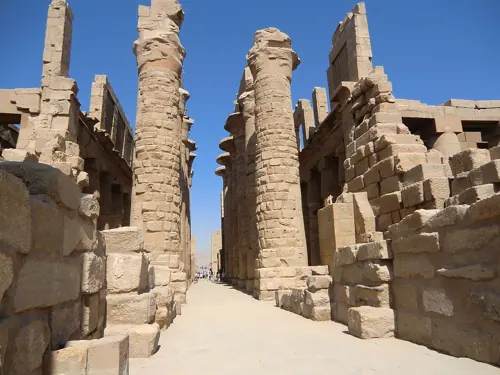
Karnak Temple
Column and court proportions follow the sacred cubit canon; the temple 'grew' along a fixed ceremonial axis for 2,000 years.
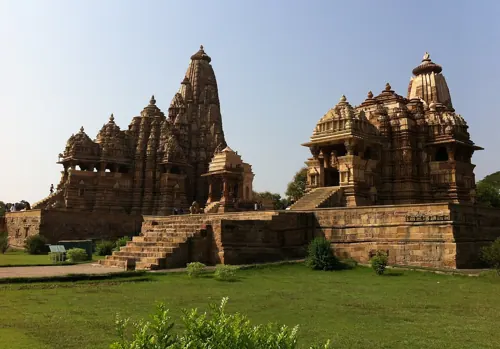
Khajuraho
Fractal self-similarity and mandala grids centuries before the mathematics describing them.
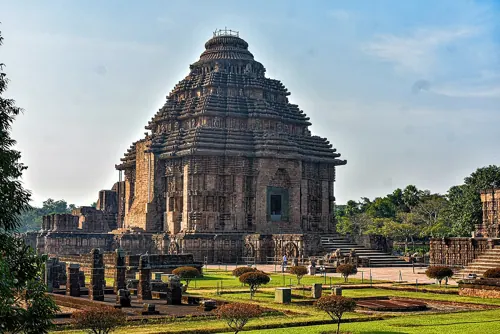
Konark Sun Temple
Wheel, spoke and horse counts all encode calendar divisions, which is sacred number applied at the scale of a building.
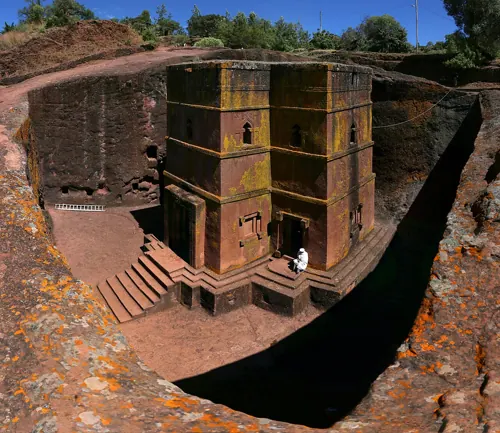
Lalibela
Bete Giyorgis's perfect Greek cross, cut freehand into a pit, is a tour de force of subtractive geometry.
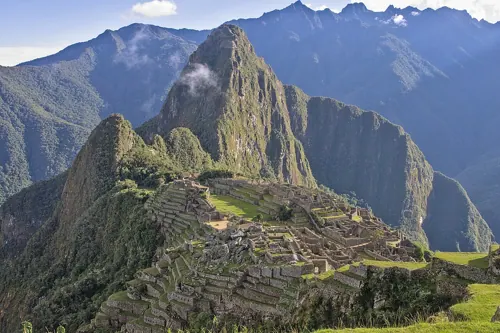
Machu Picchu
Terraces and temples mirror the geometry of surrounding peaks; the site is a deliberate dialogue between built and natural form.
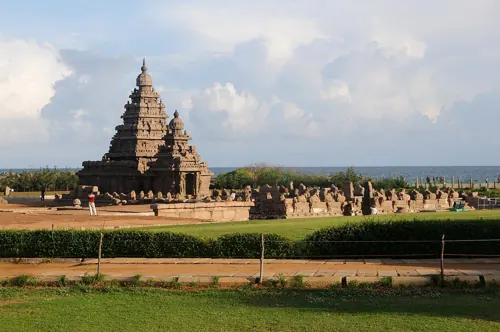
Mahabalipuram
Five ground plans in five styles within a few hundred metres, which reads as a design catalogue in stone.
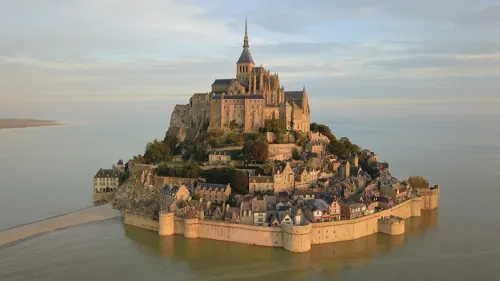
Mont-Saint-Michel
The Gothic choir's geometry follows the medieval masons' canon: ad quadratum and ad triangulum construction.
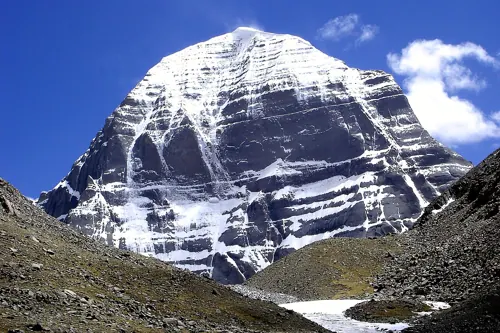
Mount Kailash
Alternative writers note its latitude and claimed distance symmetries to Stonehenge and Giza; the four-river mandala is the older, deeper geometry.
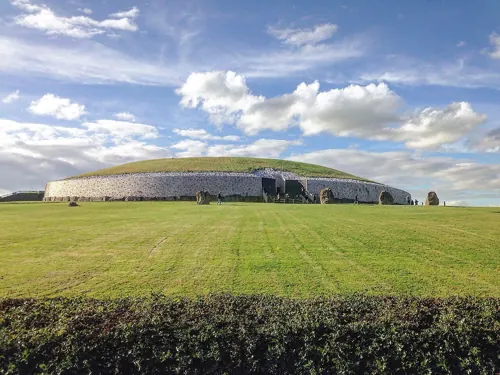
Newgrange
The triple spiral and lozenge carvings are read by sacred-geometry writers as sun-cycle and calendar notation.
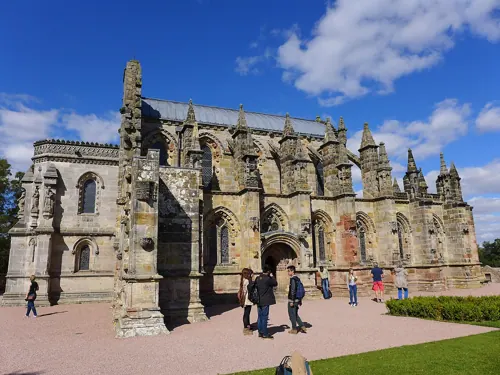
Rosslyn Chapel
The cymatics hypothesis treats the chapel as geometry of sound made visible — the boldest 'frozen music' claim in architecture.
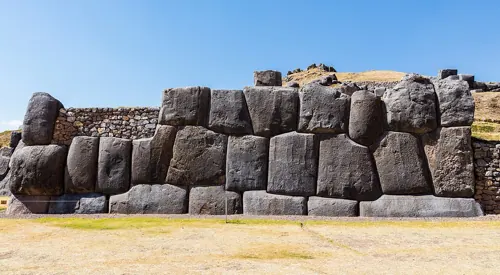
Sacsayhuamán
Interlocking polygonal masonry as earthquake engineering: geometry used as structural intelligence.
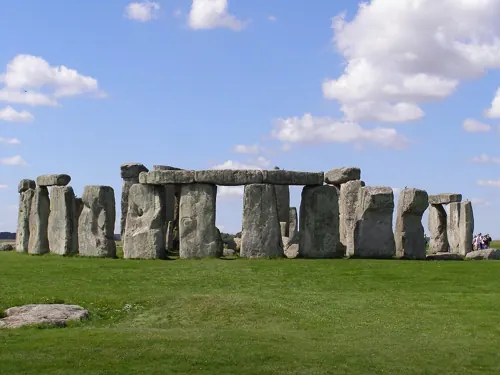
Stonehenge
The Station Stone 5:12 rectangle and nested circle geometry are claimed as deliberate Pythagorean knowledge a millennium before Pythagoras.
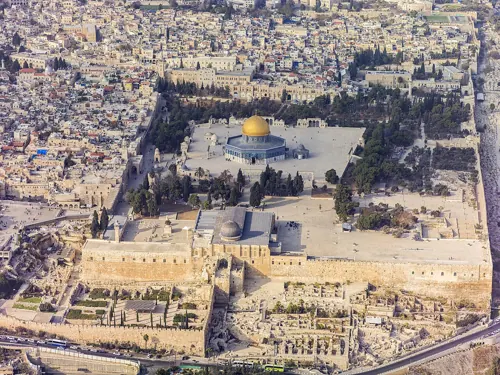
Temple Mount / Haram al-Sharif
The Dome's double octagon derives from circle-squaring geometry; Temple proportions in Kings and Ezekiel fed a millennium of sacred-measure speculation, from Newton onward.
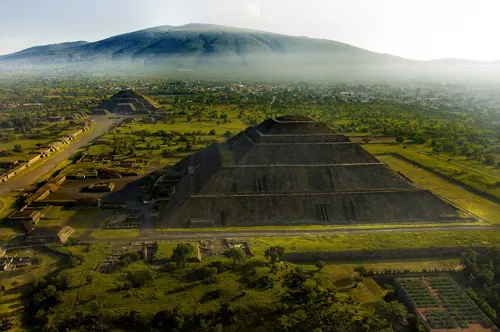
Teotihuacán
Hugh Harleston Jr. claimed the city is laid out on a repeating 'hunab' unit of 1.059 m, encoding π and φ and even planetary distances along the Avenue of the Dead.
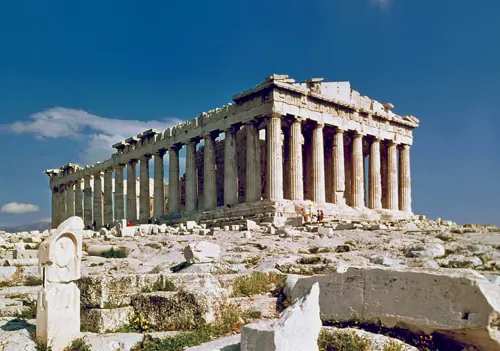
The Acropolis & Parthenon
The great test case: φ enthusiasts and 4:9 modular scholars have argued over the same facade for two centuries.
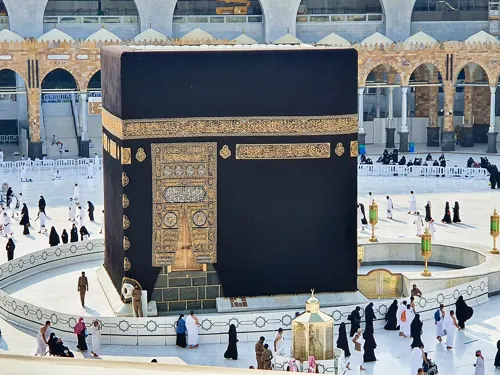
The Kaaba, Mecca
The global qibla network is a real, functioning planetary geometry — millions of great-circle bearings converging on one point.
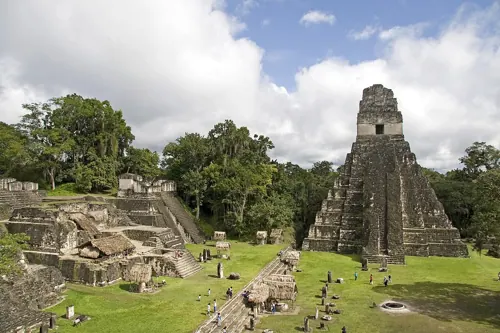
Tikal
Proponents tie the site plan to the 260-day tzolk'in count: the sightline from Temple IV to Temple I marks sunrises that split the year into 260 and 105 days.
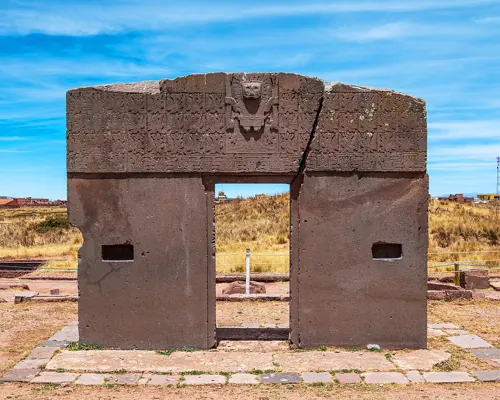
Tiwanaku & Puma Punku
The modular, repeating H-blocks suggest standardised measure and template manufacture — proto-industrial geometry.
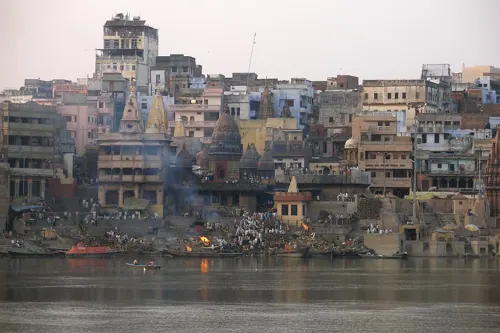
Varanasi (Kashi)
A city-scale mandala: sacred geometry inhabited by a million people rather than carved in stone.
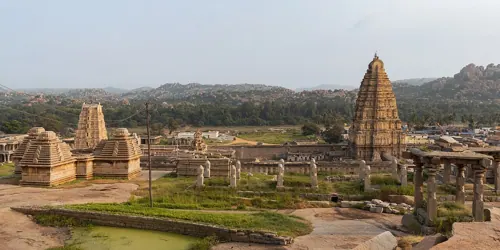
Vittala Temple, Hampi
Pitch follows each solid column's dimensions, so the carvers were working a ratio whether or not they wrote it down.
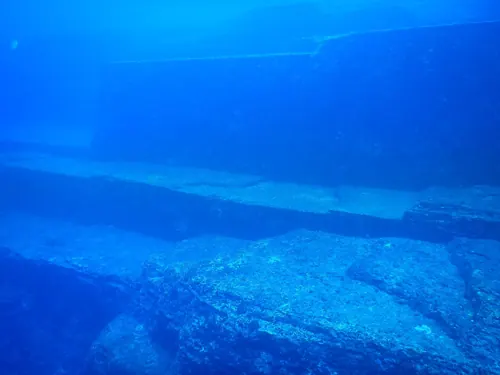
Yonaguni Monument
The core question in miniature: can nature produce right angles? (Yes — but the eye refuses to believe it.)
Reading list
The books that made the case, and the ones that answered it.
The standard introduction to the proportions builders are said to have encoded.
Mario Livio · 2002The critiqueThe Golden Ratio: The Story of PhiAn astrophysicist traces φ through history and punctures many of the claims made for it.
Miranda Lundy · 1998ReferenceSacred GeometryA short, beautifully drawn Wooden Books primer on compass-and-straightedge construction.
Links go to Amazon.
Other theories
All theories →Sky Alignments
The lens with the deepest evidence: ancient builders demonstrably aligned their monuments to the sky.
Axis Mundi
The oldest theory on this dock — older than writing.
Resonance
The newest lens, with real laboratories behind it: archaeoacoustics.
Ley Lines
In 1921 Alfred Watkins looked across the Herefordshire hills and saw ancient sites falling into straight rows — 'leys', which he read as prehistoric traders' paths.
Lost World
From Plato's Atlantis to Graham Hancock's 'Ancient Apocalypse': the idea that an advanced civilisation flourished during the Ice Age and was destroyed in the Younger Dryas cataclysm around 12,800 years ago — its survivors seeding the monument-building cultures we know.
Earth Grid
What if Earth itself has a structure — a crystalline lattice whose nodes attract sacred building?
Astronauts
Erich von Däniken's 'Chariots of the Gods?' (1968) and Zecharia Sitchin's Anunnaki made this the most famous alternative theory of all: the gods were visitors from elsewhere, and the monuments are their runways, beacons, and cargo-cult imitations built by awed witnesses.