The Lost Civilisation
From Plato's Atlantis to Graham Hancock's 'Ancient Apocalypse': the idea that an advanced civilisation flourished during the Ice Age and was destroyed in the Younger Dryas cataclysm around 12,800 years ago — its survivors seeding the monument-building cultures we know. Göbekli Tepe's impossible earliness, Gunung Padang's contested deep layers, the Sphinx water-erosion debate, and drowned candidates like Yonaguni are its modern exhibits.
rejected by mainstream archaeology — no artefacts, cities or genetic traces of such a civilisation have ever surfaced, and each 'impossible' site has a conventional reading. The Younger Dryas impact hypothesis still has a committed group of scientists behind it, though most specialists consider it refuted; Göbekli Tepe, meanwhile, genuinely did rewrite the textbooks. This lens earns its place by asking the sharpest question: what else might we be mis-dating?
Draw lost world on the globe
Opens the globe with this lens switched on across all 14 sites. Stack other lenses to see where theories agree.
14 sites in this theory
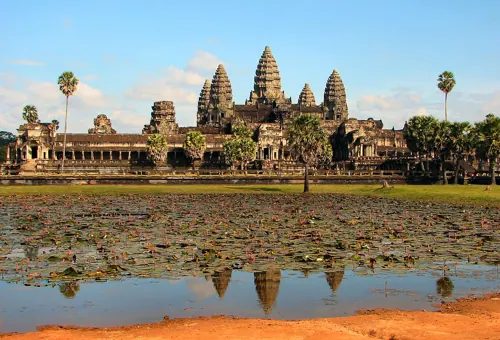
Angkor Wat
Hancock aligned Angkor's temples to the constellation Draco as it stood in 10,500 BCE — the same 'first time' epoch he reads at Giza.
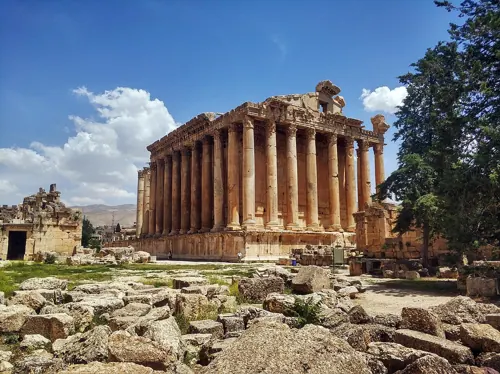
Baalbek
The trilithon is claimed as the survival of a forgotten age, with the Roman temple merely perched on top.
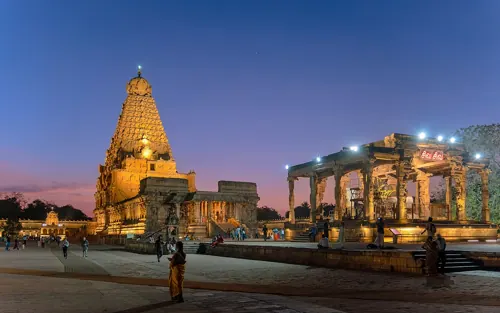
Brihadeeswarar Temple
A standard entry in lost-technology lists, on the strength of the capstone alone.
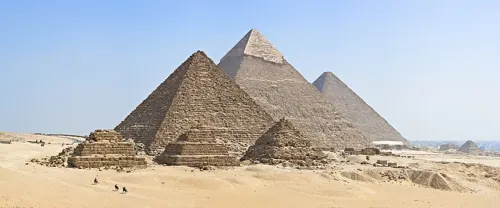
Giza Pyramid Complex
The Sphinx water-erosion hypothesis (Schwaller de Lubicz, Schoch) would push its carving back to a wetter, pre-dynastic epoch thousands of years earlier.
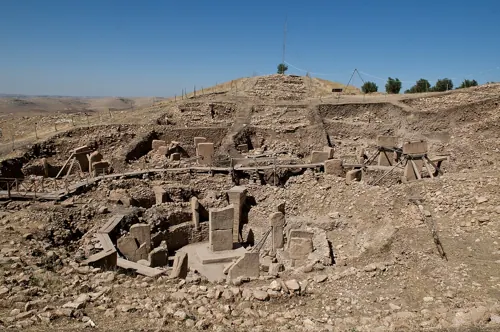
Göbekli Tepe
Its 9500 BCE date is the cornerstone of the modern argument: monumental building at exactly the moment a destroyed civilisation's survivors would have needed to regroup — so the reading goes.
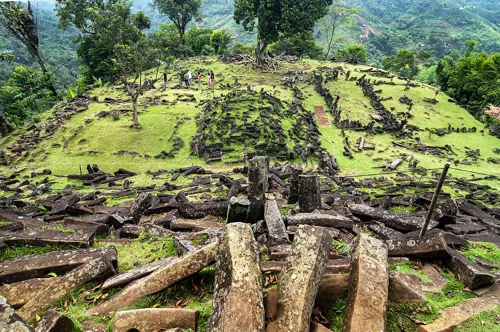
Gunung Padang
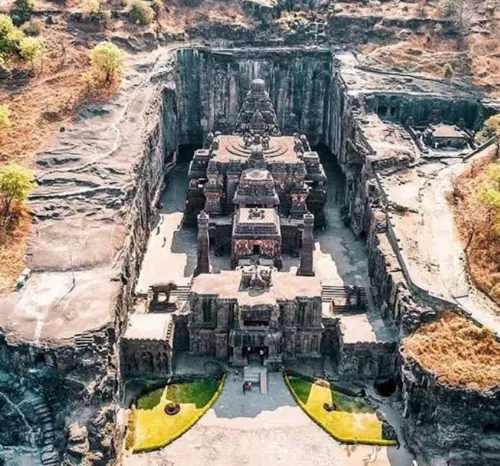
Kailasa Temple, Ellora
The standard exhibit in 'how was this done' literature: a building with no margin for error and no surviving record of its method.
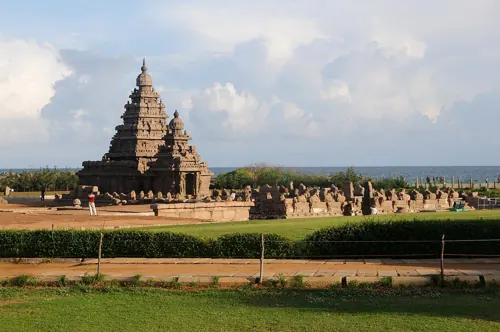
Mahabalipuram
Unfinished work is the useful kind: the abandoned surfaces show the method that finished buildings hide.
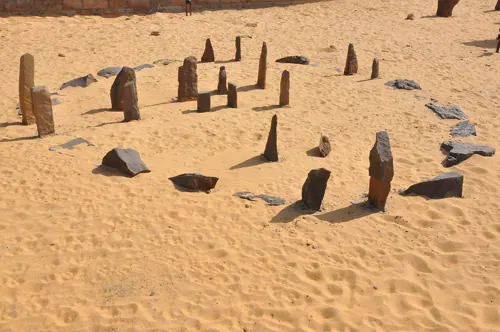
Nabta Playa
Organised astronomy in the green Sahara, two millennia before the pharaohs, hints — proponents argue — at knowledge inherited rather than invented.
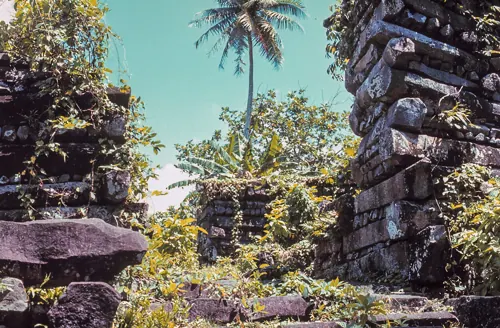
Nan Madol
Pohnpeian legend of a drowned twin city, Kahnimweiso, keeps sunken-civilisation readings of the basalt canals alive.
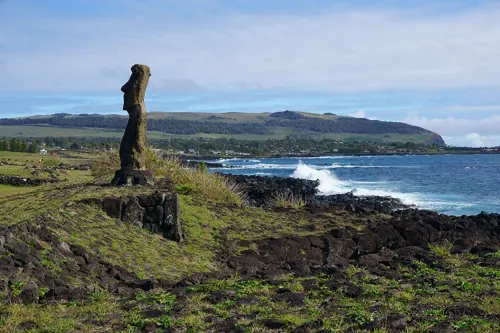
Rapa Nui (Easter Island)
Undeciphered script and colossal statues on the world's loneliest island read, to enthusiasts, like the last outpost of a drowned Pacific homeland.
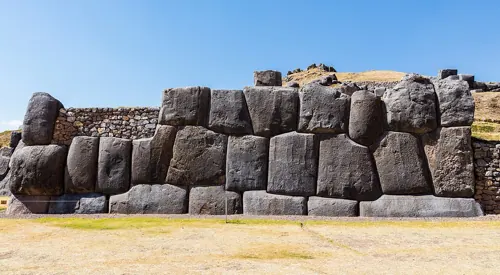
Sacsayhuamán
Alternative chronologies read the lower cyclopean courses as vastly older than the Inca, who are cast as mere inheritors and repairers.
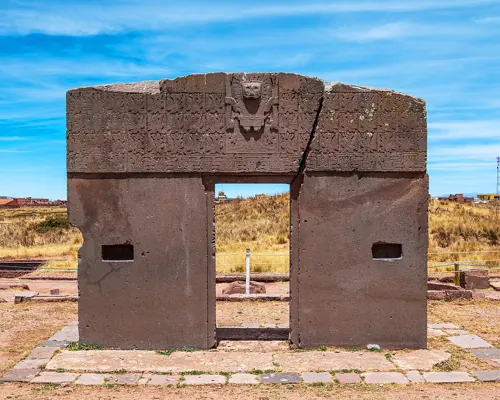
Tiwanaku & Puma Punku
Posnansky's 15,000 BCE archaeoastronomical dating made Tiwanaku the original 'antediluvian city' of the entire genre.
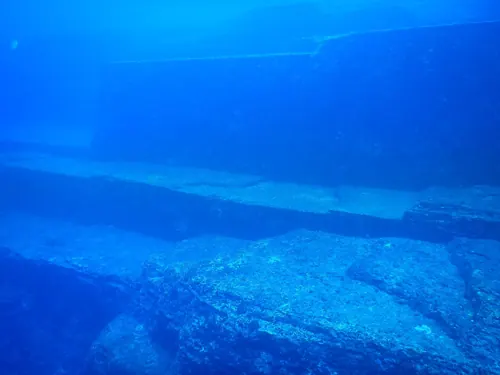
Yonaguni Monument
If human-made, lost-epoch readers say it drowned with the Ice Age shorelines some 10,000 years ago — squarely inside the lost-epoch window.
Reading list
The books that made the case, and the ones that answered it.
The bestseller behind the modern lost-civilisation argument.
Kenneth L. Feder · 1990The critiqueFrauds, Myths, and Mysteries: Science and Pseudoscience in ArchaeologyWhat archaeologists say in reply, chapter by chapter.
Graham Hancock · 2015The caseMagicians of the GodsHancock's sequel, built around Göbekli Tepe and the Younger Dryas impact.
Links go to Amazon.
Other theories
All theories →Sky Alignments
The lens with the deepest evidence: ancient builders demonstrably aligned their monuments to the sky.
Axis Mundi
The oldest theory on this dock — older than writing.
Resonance
The newest lens, with real laboratories behind it: archaeoacoustics.
Sacred Geometry
From Giza's φ-flirting slopes to Chartres' compass-drawn everything, sacred geometry claims certain proportions — the golden ratio, π, √2, the mandala grid — carry meaning, and that ancient builders encoded them deliberately.
Ley Lines
In 1921 Alfred Watkins looked across the Herefordshire hills and saw ancient sites falling into straight rows — 'leys', which he read as prehistoric traders' paths.
Earth Grid
What if Earth itself has a structure — a crystalline lattice whose nodes attract sacred building?
Astronauts
Erich von Däniken's 'Chariots of the Gods?' (1968) and Zecharia Sitchin's Anunnaki made this the most famous alternative theory of all: the gods were visitors from elsewhere, and the monuments are their runways, beacons, and cargo-cult imitations built by awed witnesses.