Mapping Earth's sacred sites & hidden lines
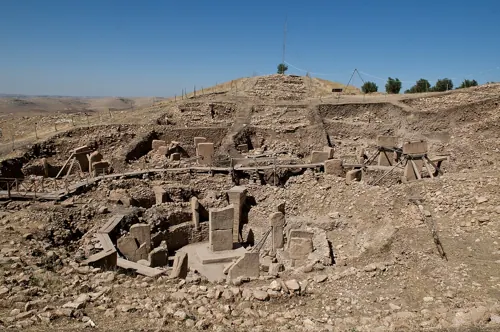
Seventy-one of the planet's most storied sacred places, from 12,000-year-old Göbekli Tepe to shrines rebuilt every twenty years.
Every theory here comes with a plain verdict: what's measured, what's contested, and what's just a good story.
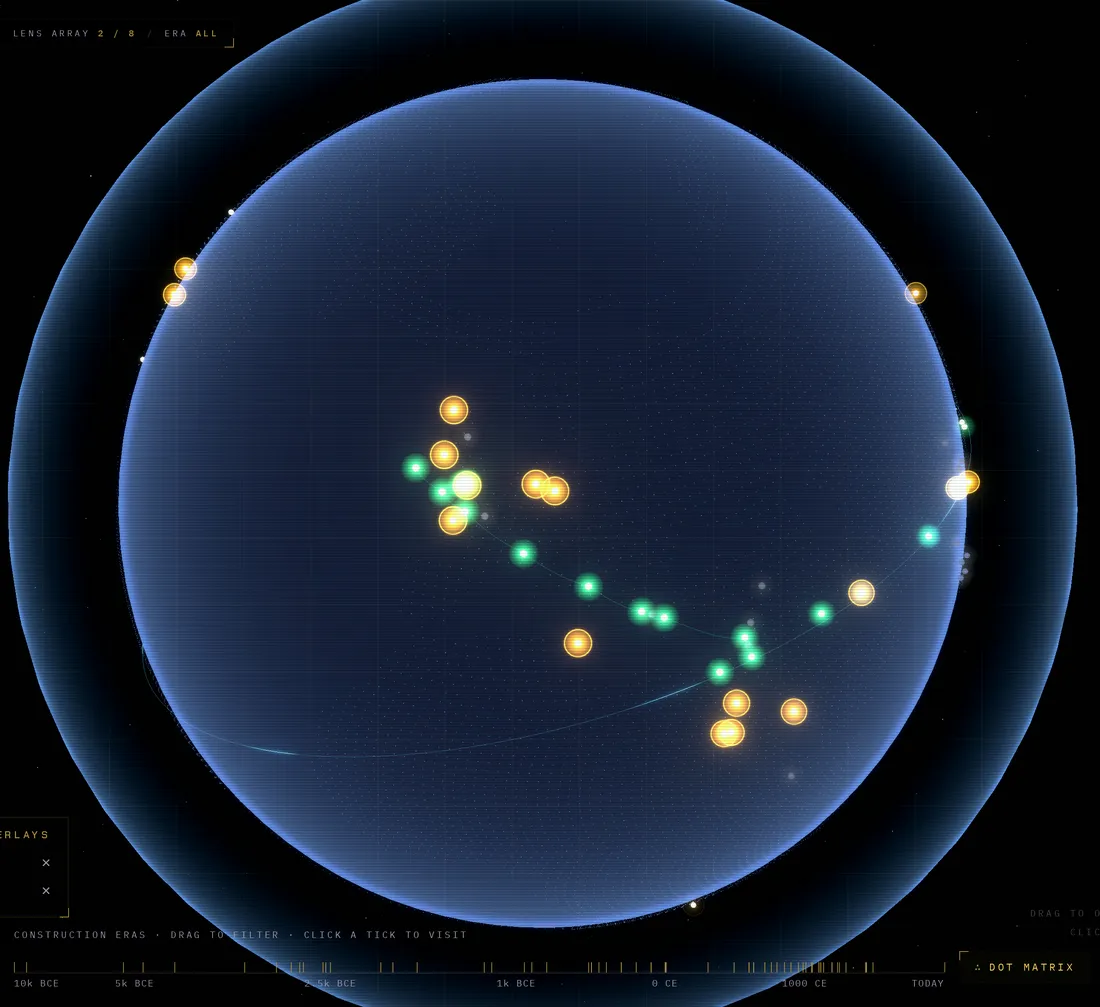
The theories, rated by evidence
All theories →Sky Alignments
The lens with the deepest evidence: ancient builders demonstrably aligned their monuments to the sky.
Axis Mundi
The oldest theory on this dock — older than writing.
Resonance
The newest lens, with real laboratories behind it: archaeoacoustics.
Sacred Geometry
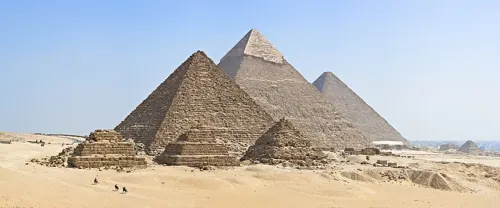
From Giza's φ-flirting slopes to Chartres' compass-drawn everything, sacred geometry claims certain proportions — the golden ratio, π, √2, the mandala grid — carry meaning, and that ancient builders encoded them deliberately.
Ley Lines
In 1921 Alfred Watkins looked across the Herefordshire hills and saw ancient sites falling into straight rows — 'leys', which he read as prehistoric traders' paths.
Lost World
From Plato's Atlantis to Graham Hancock's 'Ancient Apocalypse': the idea that an advanced civilisation flourished during the Ice Age and was destroyed in the Younger Dryas cataclysm around 12,800 years ago — its survivors seeding the monument-building cultures we know.
Earth Grid
What if Earth itself has a structure — a crystalline lattice whose nodes attract sacred building?
Astronauts
Erich von Däniken's 'Chariots of the Gods?' (1968) and Zecharia Sitchin's Anunnaki made this the most famous alternative theory of all: the gods were visitors from elsewhere, and the monuments are their runways, beacons, and cargo-cult imitations built by awed witnesses.