The Axis Mundi
The oldest theory on this dock — older than writing. Cultures everywhere declared a centre where heaven, earth and underworld connect: the omphalos at Delphi, the Foundation Stone in Jerusalem, Mount Kailash, the Kaaba, and Rapa Nui's Te Pito o Te Henua — popularly translated 'the navel of the world'. Beams of light mark the places humanity has crowned the centre of everything.
on firm ground — as anthropology. Mircea Eliade famously argued that the axis mundi is a near-universal structure of religious thought; later scholars think he overstated how universal it is, but sacred centres really do recur across a remarkable range of cultures. The fascinating part is the convergence: cultures with no contact built strikingly similar cosmic architecture. Whatever the earth-grid theorists are searching for, this is the version humanity actually built.
Draw axis mundi on the globe
Opens the globe with this lens switched on across all 12 sites. Stack other lenses to see where theories agree.
12 sites in this theory
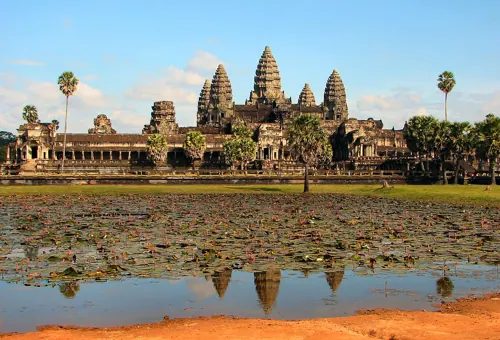
Angkor Wat
Five towers model Mount Meru's peaks — an empire physically arranged around the world-axis.
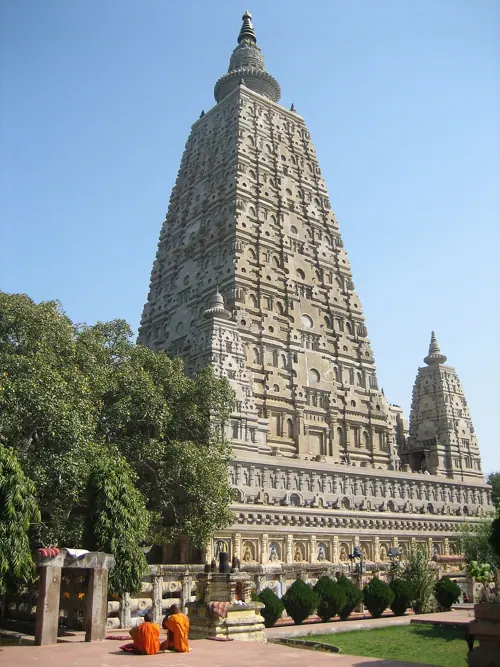
Bodh Gaya
The vajrasana is the immovable point of the universe — the last place to vanish when a world ends and the first to re-form.
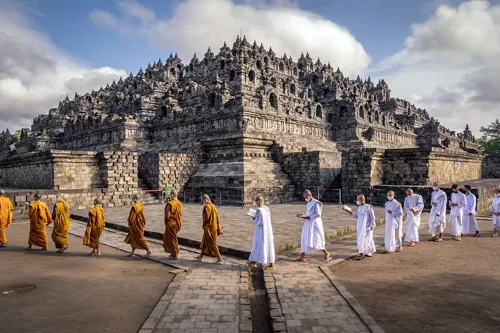
Borobudur
A walkable Mount Meru: the cosmic axis rendered as ten terraces of ascent from desire to formlessness.
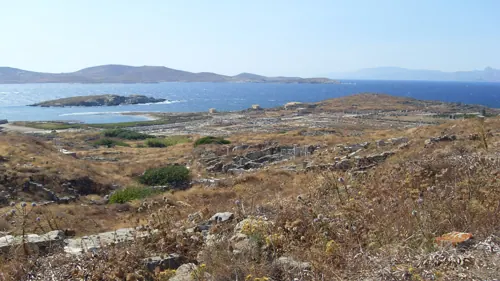
Delos
An island anchored in the sea so a god could be born — then purified until neither birth nor death could touch it again.
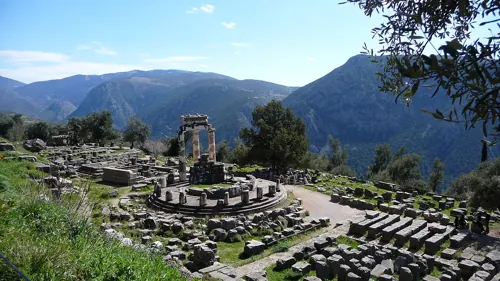
Delphi
The omphalos — the navel stone — marked where Zeus's two eagles met, flying from the ends of the earth.
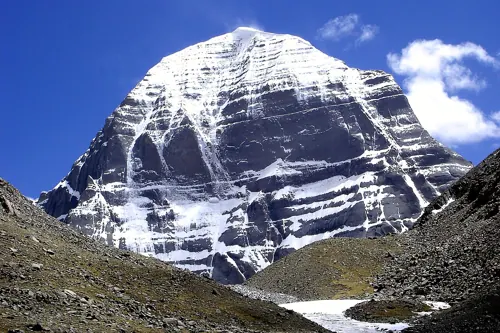
Mount Kailash
The literal axis mundi of four living religions — the unclimbed pole at the centre of the world-mandala, ringed by four great rivers.
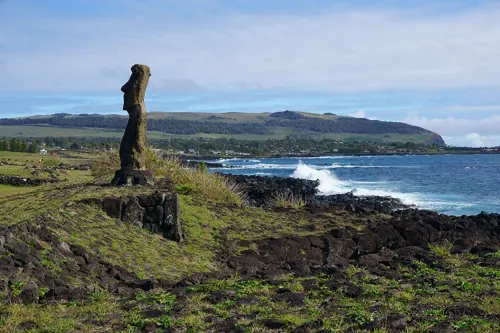
Rapa Nui (Easter Island)
The island's own name for itself: Te Pito o Te Henua — the navel of the world.
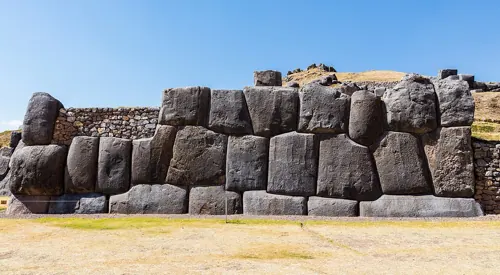
Sacsayhuamán
Cusco means 'navel' in Quechua — the city where the four quarters of the Inca world met, with Sacsayhuamán as its crown.
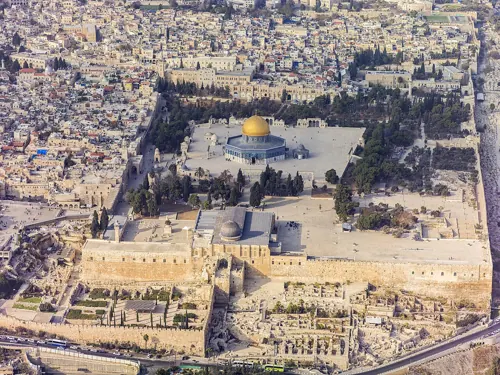
Temple Mount / Haram al-Sharif
The Foundation Stone is the navel of the world in three faiths; medieval maps drew the city at the exact centre of the earth.
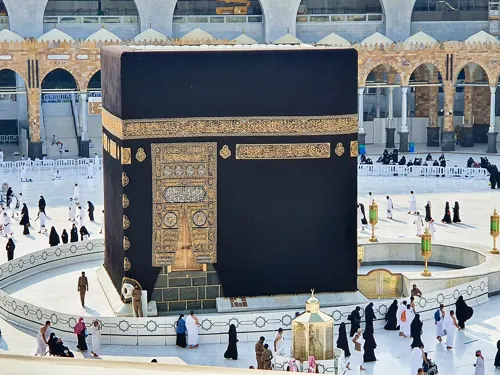
The Kaaba, Mecca
The Kaaba sits, tradition says, directly beneath the heavenly house the angels circle — the axis of a planetary geometry of prayer.
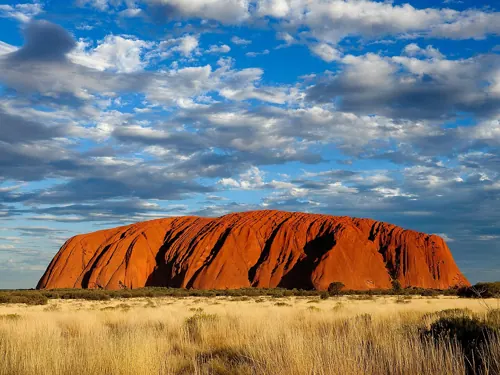
Uluru
Every fold of the rock is Tjukurpa; Uluru anchors a continent-wide web of songlines — sacred geography at its most alive.
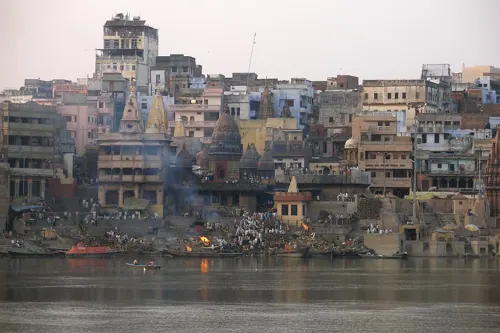
Varanasi (Kashi)
Standing on the point of Shiva's trident, outside ordinary space and time — the city where the cosmos is said to have been founded.
Reading list
The books that made the case, and the ones that answered it.
Eliade's short classic on sacred space and the centre of the world.
Mircea Eliade · 1949ReferenceThe Myth of the Eternal ReturnHow archaic cultures anchored time and place to a sacred centre.
Links go to Amazon.
Other theories
All theories →Sky Alignments
The lens with the deepest evidence: ancient builders demonstrably aligned their monuments to the sky.
Resonance
The newest lens, with real laboratories behind it: archaeoacoustics.
Sacred Geometry
From Giza's φ-flirting slopes to Chartres' compass-drawn everything, sacred geometry claims certain proportions — the golden ratio, π, √2, the mandala grid — carry meaning, and that ancient builders encoded them deliberately.
Ley Lines
In 1921 Alfred Watkins looked across the Herefordshire hills and saw ancient sites falling into straight rows — 'leys', which he read as prehistoric traders' paths.
Lost World
From Plato's Atlantis to Graham Hancock's 'Ancient Apocalypse': the idea that an advanced civilisation flourished during the Ice Age and was destroyed in the Younger Dryas cataclysm around 12,800 years ago — its survivors seeding the monument-building cultures we know.
Earth Grid
What if Earth itself has a structure — a crystalline lattice whose nodes attract sacred building?
Astronauts
Erich von Däniken's 'Chariots of the Gods?' (1968) and Zecharia Sitchin's Anunnaki made this the most famous alternative theory of all: the gods were visitors from elsewhere, and the monuments are their runways, beacons, and cargo-cult imitations built by awed witnesses.