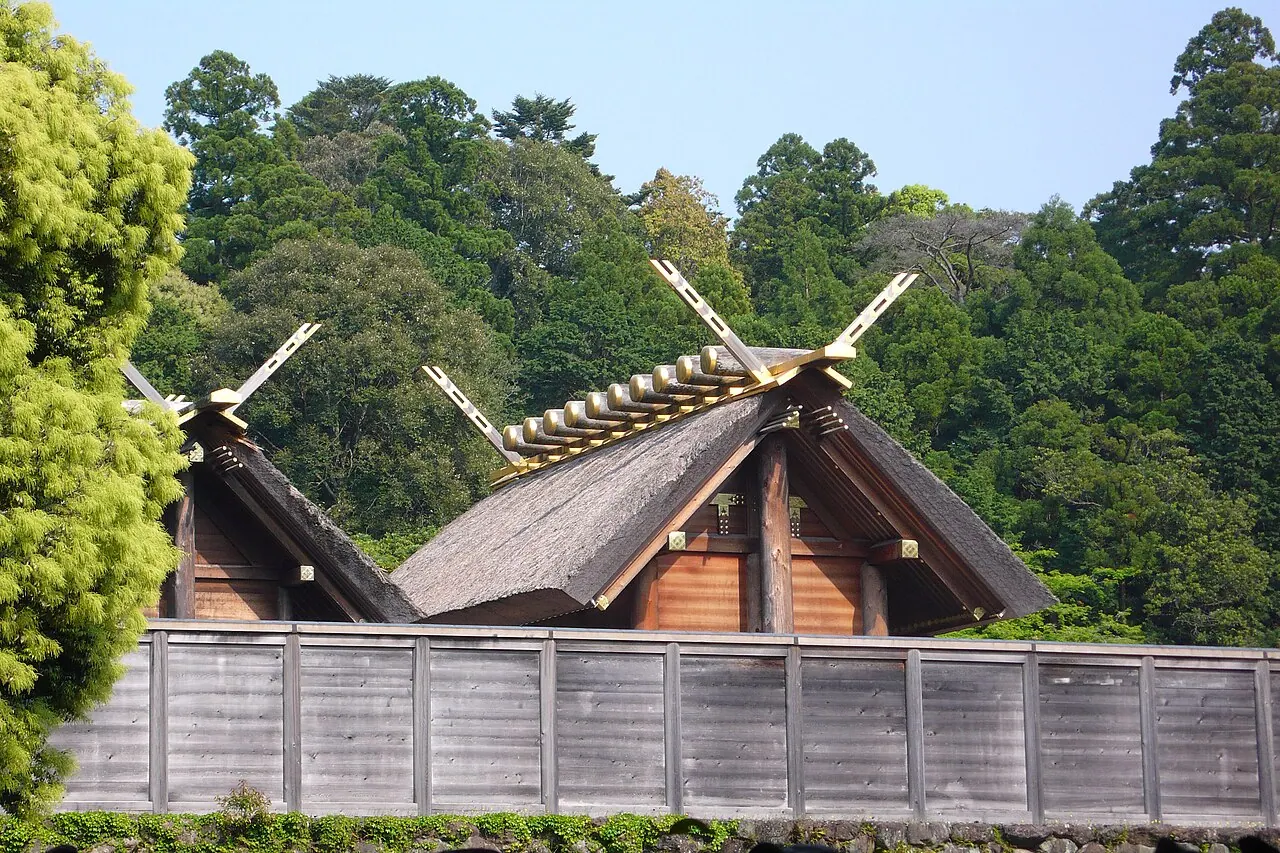
Shinto's holiest site enshrines Amaterasu, the sun goddess, and houses the sacred mirror of the imperial regalia — which no one, including emperors, may view. Every 20 years, in the Shikinen Sengu ceremony performed since 690 CE, the entire shrine is rebuilt from new hinoki cypress on an adjacent plot, and the old one dismantled: the 63rd rebuilding is scheduled for 2033. The buildings are always new; the building is 1,300 years old. It is the opposite strategy to the pyramids — and it has outlasted most of them culturally intact.
See Ise Grand Shrine on the globe
Opens with the Sky Alignments lens on, so you can see what it connects to.
Notable facts
- Rebuilt 62 times; carpenters train their whole lives for techniques used once a generation.
- The inner sanctum is screened by four fences; ordinary pilgrims see only the roofline.
- Shrine timbers are recycled to shrines across Japan — the sacred is composted, not discarded.
Through the theories
How each theory reads Ise Grand Shrine. Follow a theory to see its verdict and every other site it claims.
Sky AlignmentsEstablished science
Amaterasu is the sun itself; the shrine's rites are keyed to the solar calendar and imperial solstice rituals.
Sacred GeometryA spectrum
Sacredness located in proportion and ritual process, not material permanence — geometry as verb, not noun.