Acoustic Resonance
The newest lens, with real laboratories behind it: archaeoacoustics. Several ancient chambers measurably resonate near 110 Hz (Ħal Saflieni's Oracle Room, Newgrange), Chavín's stone galleries filter sound to match its ritual conch trumpets, and El Castillo at Chichén Itzá answers a handclap with a quetzal's chirp. The boldest version of the claim: these spaces were tuned instruments, built to alter the consciousness of the people inside them. Pulsing rings mark sites with measured or credibly reported acoustic phenomena.
the measurements are real and several are peer-reviewed; the open question is intent — deliberate tuning, or the happy accident of corbelled stone chambers? The small 2008 study linking 110 Hz exposure to shifts in prefrontal brain activity is intriguing and awaits replication. Of all the alternative lenses, this is the most testable.
Draw resonance on the globe
Opens the globe with this lens switched on across all 10 sites. Stack other lenses to see where theories agree.
10 sites in this theory
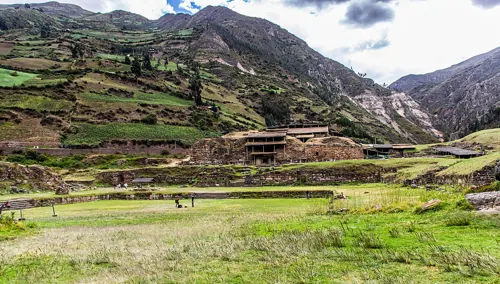
Chavín de Huántar
Stanford acousticians showed the galleries filter sound to match the frequency band of the pututu conch trumpets found on site — architecture as instrument.
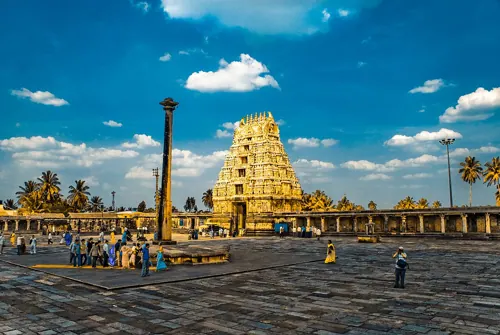
Chennakeshava Temple, Belur
Belur is cited alongside Hampi in ringing-stone lists, though nobody has instrumented it the way Hampi has.
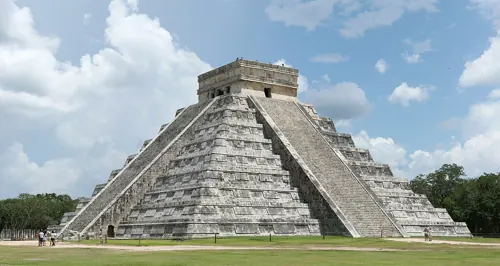
Chichén Itzá
A handclap at El Castillo's stairway returns a chirped echo matching the call of the quetzal — argued by acoustician David Lubman to be a deliberately engineered effect.
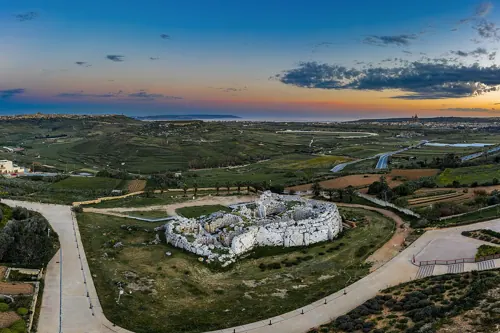
Ġgantija & the Malta Temples
The Hypogeum's Oracle Room resonates near 110 Hz — a frequency that a small laboratory EEG study (Cook, Pajot & Leuchter, 2008) found dampened language-area activity and shifted prefrontal activity rightward, which the authors tentatively linked to emotional processing.
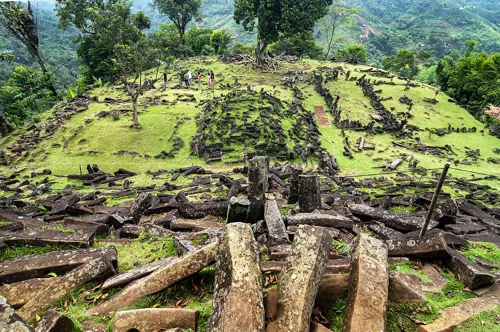
Gunung Padang
Certain basalt columns ring when struck — locals call them 'batu gamelan', the gamelan stones.
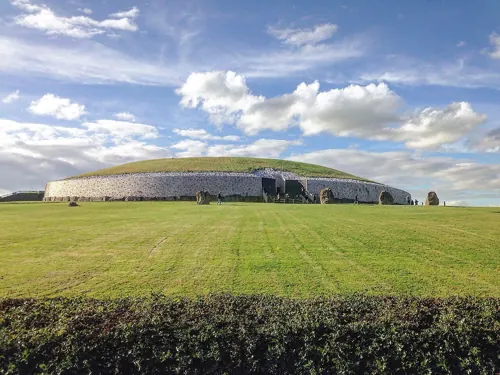
Newgrange
The chamber resonates near 110 Hz, like Malta's Hypogeum; low chanting fills the tomb with standing waves that seem to come from everywhere.
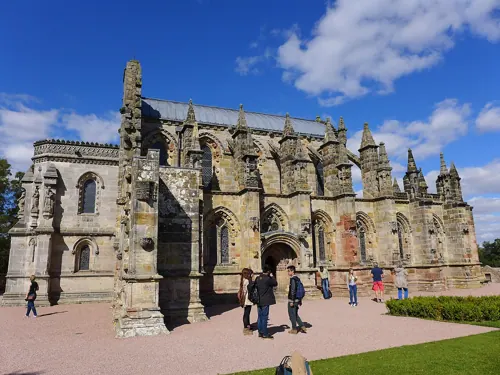
Rosslyn Chapel
The 213 carved cubes have been mapped to Chladni resonance patterns and performed as the 'Rosslyn Motet' — the boldest claim of frozen music in architecture.
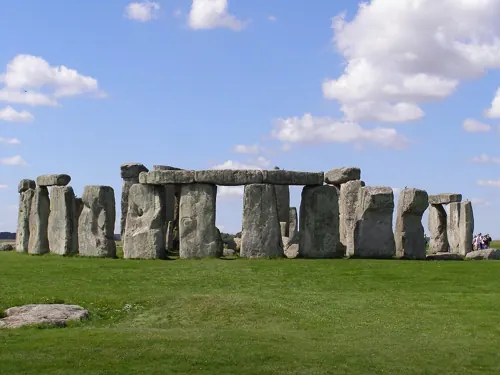
Stonehenge
The Preseli bluestones are lithophones — some ring like bells when struck, and a 'bluestone soundscape' theory argues they were hauled 240 km for their voice.
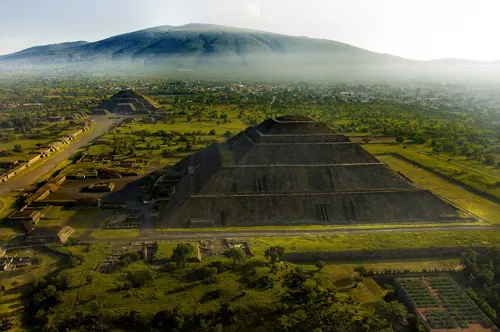
Teotihuacán
Handclaps on the staircases return raindrop-like chirped echoes, linked by some researchers to the rain god's iconography.
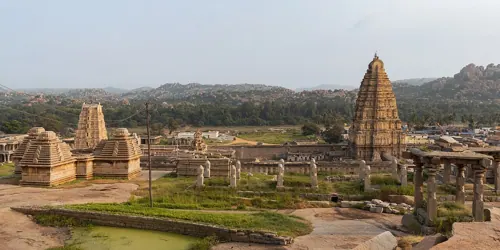
Vittala Temple, Hampi
The clearest case anywhere that a builder tuned architecture deliberately, and one of the few with instrumented measurement behind it.
Reading list
The books that made the case, and the ones that answered it.
The accessible overview of archaeoacoustics, from Newgrange to Chavín.
Trevor Cox · 2014ReferenceSonic Wonderland: A Scientific Odyssey of SoundAn acoustic engineer tours the world's strangest-sounding places, ancient ones included.
Links go to Amazon.
Other theories
All theories →Sky Alignments
The lens with the deepest evidence: ancient builders demonstrably aligned their monuments to the sky.
Axis Mundi
The oldest theory on this dock — older than writing.
Sacred Geometry
From Giza's φ-flirting slopes to Chartres' compass-drawn everything, sacred geometry claims certain proportions — the golden ratio, π, √2, the mandala grid — carry meaning, and that ancient builders encoded them deliberately.
Ley Lines
In 1921 Alfred Watkins looked across the Herefordshire hills and saw ancient sites falling into straight rows — 'leys', which he read as prehistoric traders' paths.
Lost World
From Plato's Atlantis to Graham Hancock's 'Ancient Apocalypse': the idea that an advanced civilisation flourished during the Ice Age and was destroyed in the Younger Dryas cataclysm around 12,800 years ago — its survivors seeding the monument-building cultures we know.
Earth Grid
What if Earth itself has a structure — a crystalline lattice whose nodes attract sacred building?
Astronauts
Erich von Däniken's 'Chariots of the Gods?' (1968) and Zecharia Sitchin's Anunnaki made this the most famous alternative theory of all: the gods were visitors from elsewhere, and the monuments are their runways, beacons, and cargo-cult imitations built by awed witnesses.