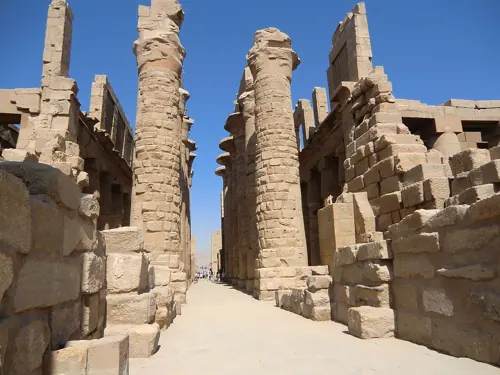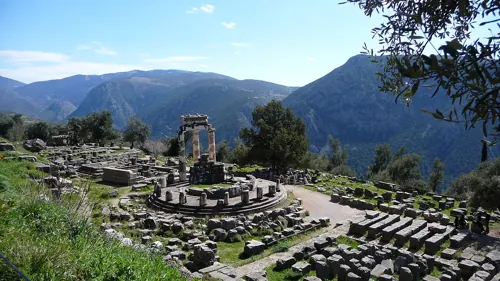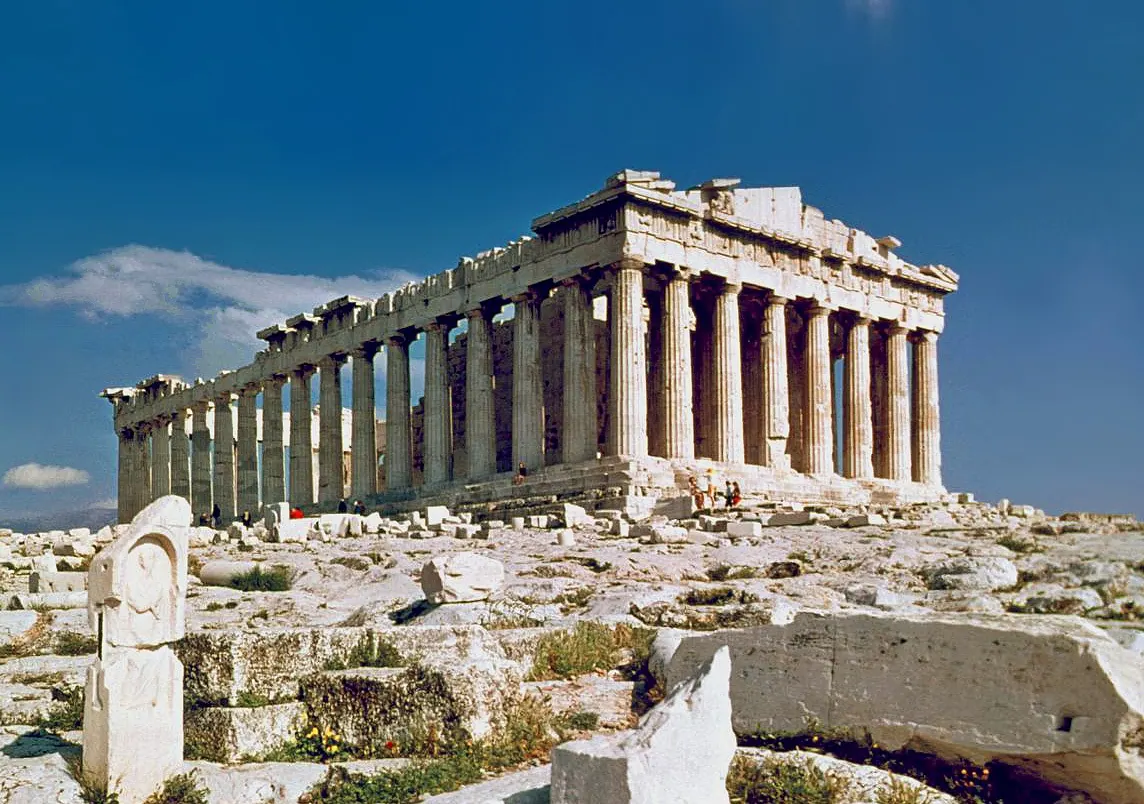
The Parthenon is the most analysed building on Earth. Its stylobate bows upward, its columns lean inward and swell (entasis), its corner columns thicken — dozens of 'optical refinements' that cancel the eye's distortions. Whether its facade encodes the golden ratio is genuinely debated (the 4:9 ratio is better documented), but its proportional discipline — every part derived from a common module — made it the textbook of classical harmony for 2,400 years.
See The Acropolis & Parthenon on the globe
Opens with the Sky Alignments lens on, so you can see what it connects to.
Notable facts
- The stylobate rises ~11 cm at centre on the long sides (about 6 cm on the ends) — a deliberate parabolic curve.
- If extended, the corner columns' inward lean would meet ~2.4 km above the temple.
- Built in just 15 years, without mortar — its marble blocks held by iron clamps set in lead, with joints so fine they are all but invisible.
Through the theories
How each theory reads The Acropolis & Parthenon. Follow a theory to see its verdict and every other site it claims.
Sky AlignmentsEstablished science
Some archaeoastronomers argue it was oriented to sunrise on an Athena festival date, with possible sightlines to the Hymettos horizon — a reading still debated.
Sacred GeometryA spectrum
The great test case: φ enthusiasts and 4:9 modular scholars have argued over the same facade for two centuries.