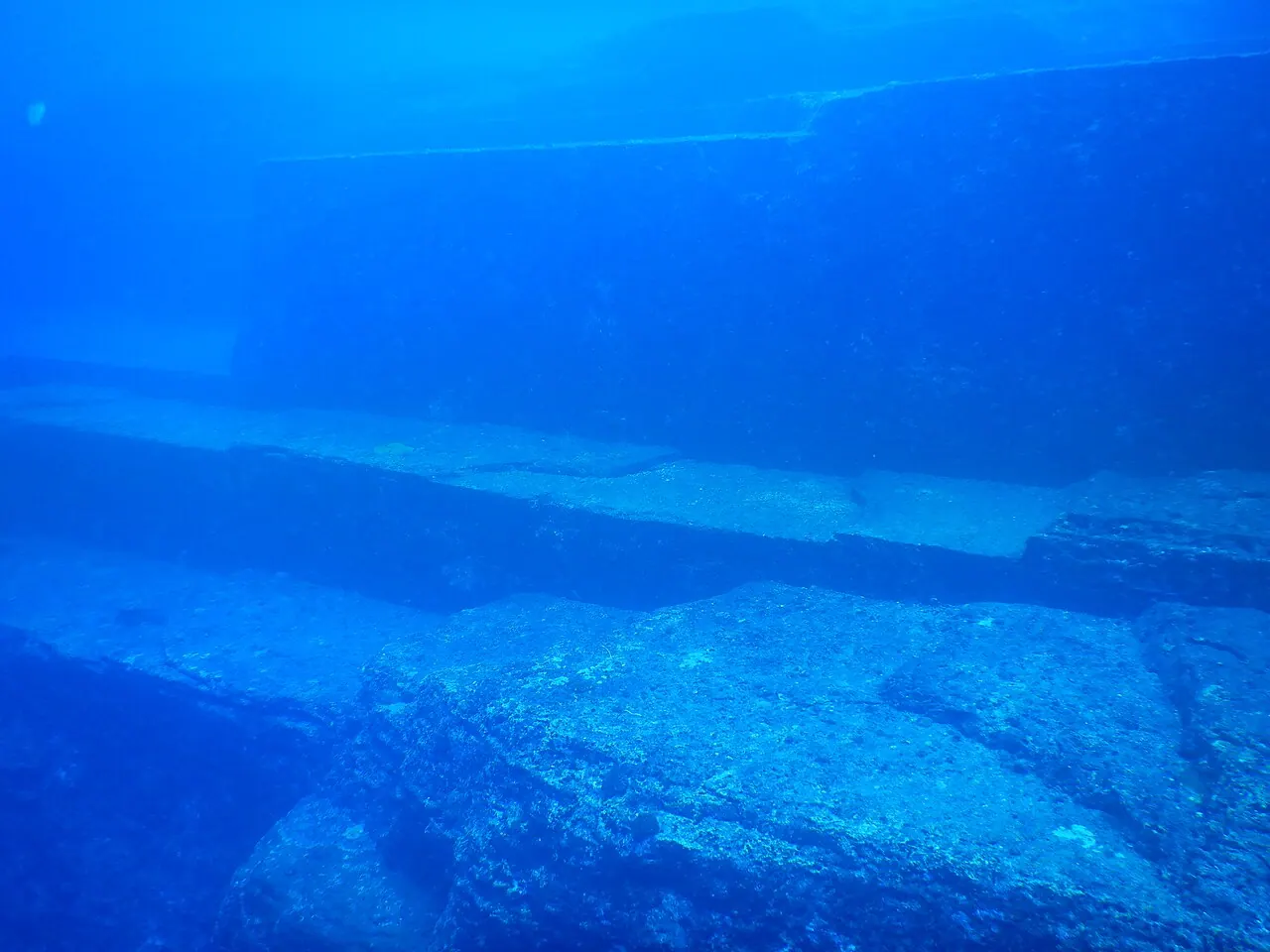
Off Japan's westernmost island, divers in 1986 found a sandstone formation 50 metres long with flat terraces, sharp right-angle 'steps' and channels. Masaaki Kimura has argued for decades that it is a modified, now-submerged complex; he first put it at 10,000 or more years old, drowned by post-glacial sea rise, though in 2007 he revised his estimate to just 2,000–3,000 years. Most geologists (notably Robert Schoch, no stranger to bold claims) judge it natural: the local sandstone fractures along flat bedding planes and vertical joints, producing staircase forms visible on the island above water too. It remains the world's most photogenic Rorschach test.
See Yonaguni Monument on the globe
Opens with the Sacred Geometry lens on, so you can see what it connects to.
Notable facts
- Lies 25 m down; strong currents make survey diving genuinely difficult.
- Identical step-fracturing appears in the island's onshore cliffs.
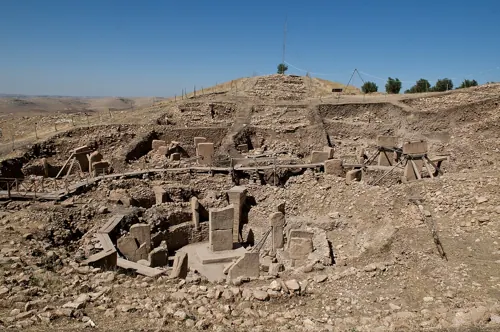
- If artificial and as old as its boldest dating, it would rival Göbekli Tepe as the oldest monumental structure on Earth.
Through the theories
How each theory reads Yonaguni Monument. Follow a theory to see its verdict and every other site it claims.
Sacred GeometryA spectrum
The core question in miniature: can nature produce right angles? (Yes — but the eye refuses to believe it.)
Lost WorldRejected by mainstream
If human-made, lost-epoch readers say it drowned with the Ice Age shorelines some 10,000 years ago — squarely inside the lost-epoch window.
Earth GridNo measurable evidence
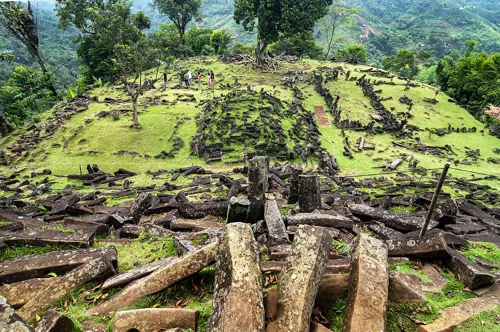
A pillar of 'sunken Ice Age civilisation' theories alongside Gunung Padang and the Younger Dryas debate.