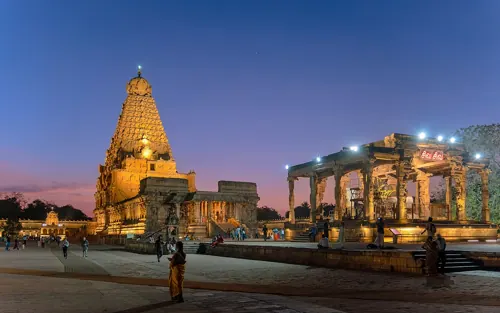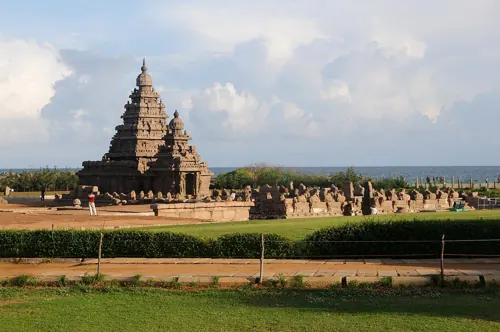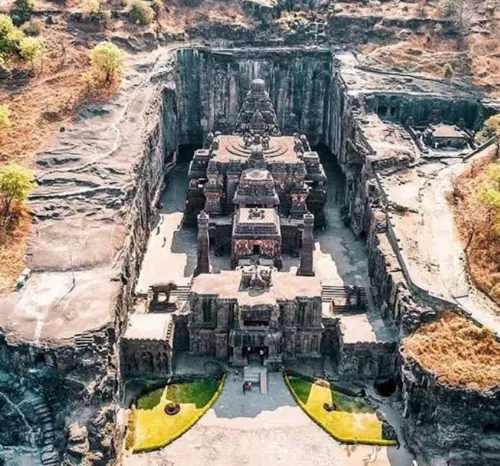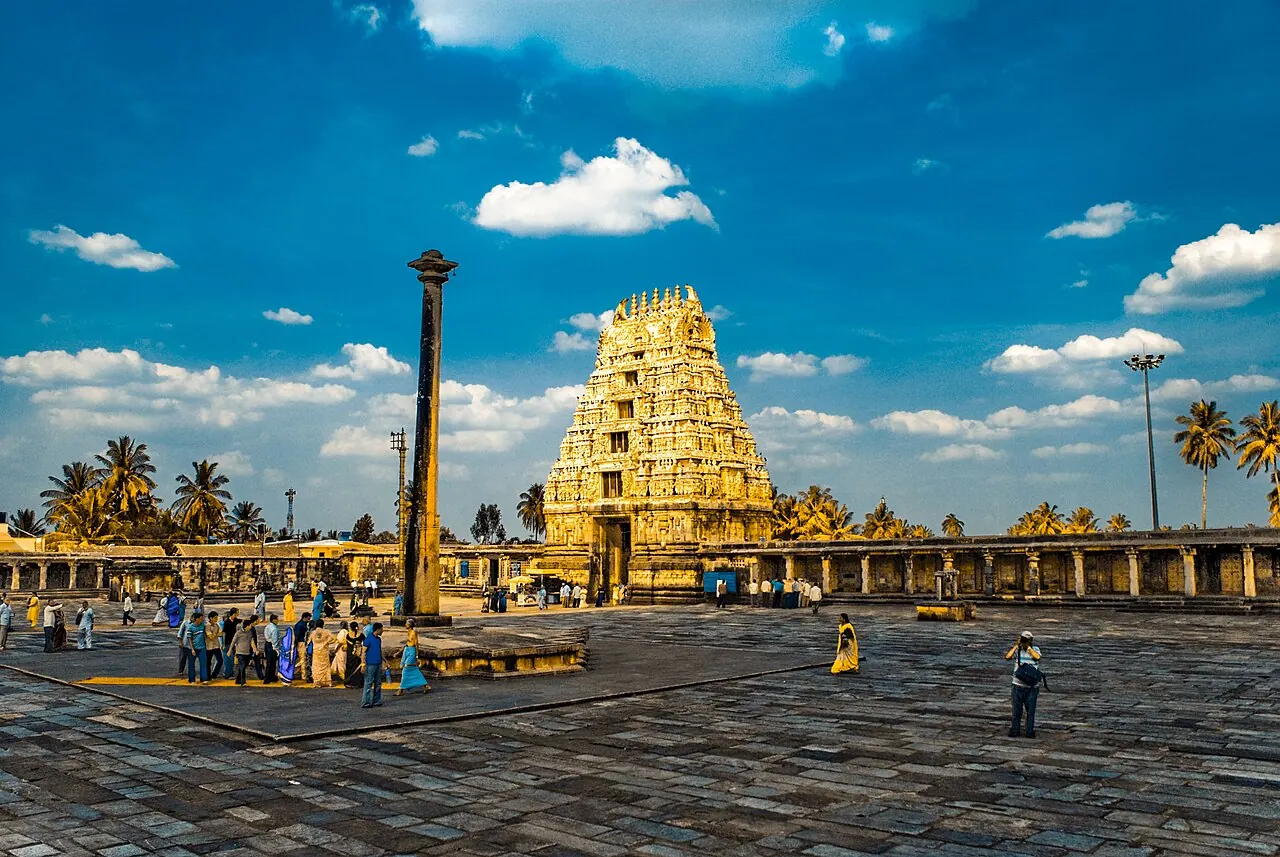
Vishnuvardhana raised the temple to mark a victory over the Cholas, and the Hoysala workshops finished it over three generations. Most of its pillars were turned rather than chiselled round: soapstone is soft enough to cut on a lathe and hardens on exposure, so the profiles are machine-true and no two are alike. Local legend holds that the Narasimha pillar inside the navaranga was once mounted so it could be revolved on its own axis. It does not turn today. It is also called the index pillar, because every motif used anywhere in the temple is said to appear somewhere on it in miniature.
See Chennakeshava Temple, Belur on the globe
Opens with the Resonance lens on, so you can see what it connects to.
Notable facts
- Local legend says the Narasimha pillar could once be rotated about its own axis; it cannot be turned today.
- Every carving style used in the temple is reproduced on that one pillar in miniature.
- Hoysala sculptors signed their work, so parts of the building carry the name of the person who cut them.
Through the theories
How each theory reads Chennakeshava Temple, Belur. Follow a theory to see its verdict and every other site it claims.
ResonanceMeasured; intent debated
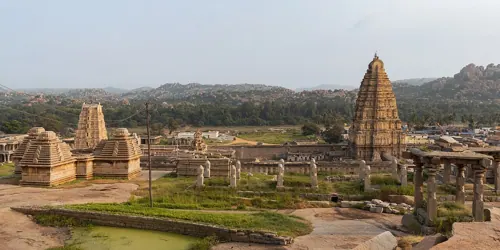
Belur is cited alongside Hampi in ringing-stone lists, though nobody has instrumented it the way Hampi has.
Sacred GeometryA spectrum
Lathe-turned profiles mean a rotational tolerance held by hand, which is a different kind of precision from the usual megalithic argument.