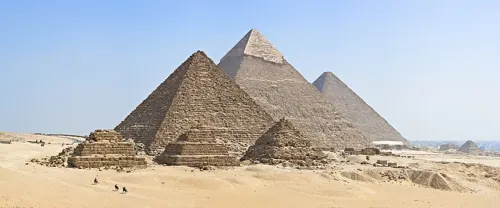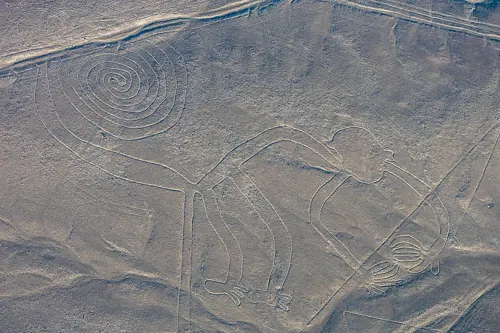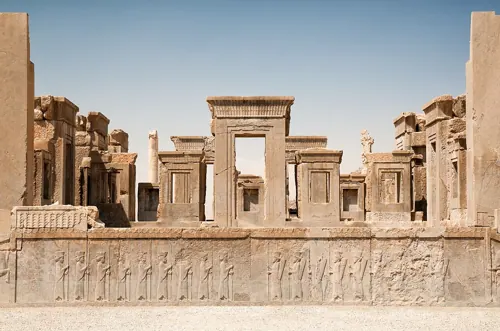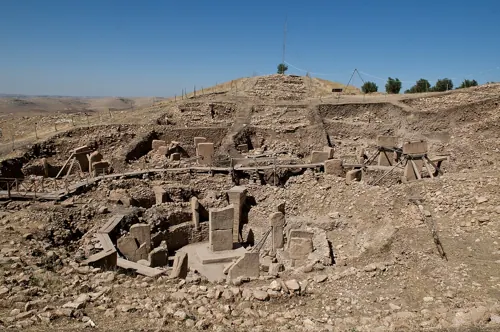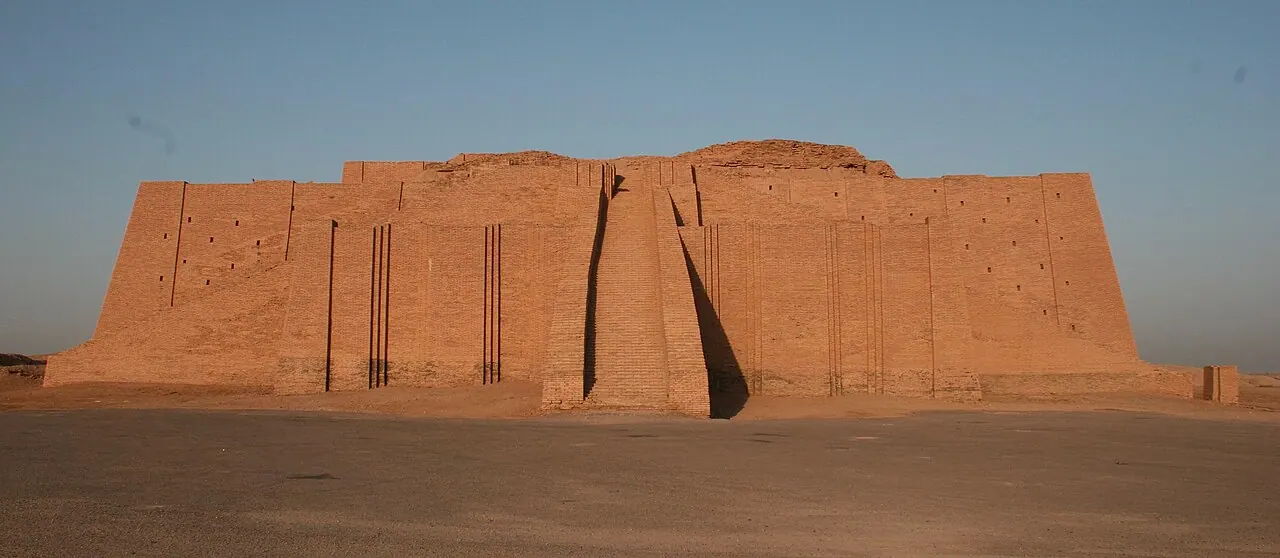
Ur-Nammu's ziggurat to Nanna, the moon god, is the best preserved of Mesopotamia's temple-mountains: a mudbrick core faced in baked brick set in bitumen, with three staircases converging on a summit shrine now vanished. Ziggurats were literal 'mountains of god' for a land without mountains, and their stepped form is the deep ancestor of the pyramid idea. Woolley's excavations nearby uncovered the Royal Tombs and their retinues of sacrificed attendants; tradition ties Ur to Abraham's birthplace.
See Great Ziggurat of Ur on the globe
Opens with the Sky Alignments lens on, so you can see what it connects to.
Notable facts
- The lowest stage survives ~15 m high after 4,100 years; Saddam-era restoration rebuilt the facing.
- Weeper-holes ventilate the mudbrick core — engineering for a structure that must breathe.
- The Royal Tombs' 'Great Death Pit' held 74 attendants in ceremonial dress.
Through the theories
How each theory reads Great Ziggurat of Ur. Follow a theory to see its verdict and every other site it claims.
Sky AlignmentsEstablished science
Dedicated to the moon; its corners, not faces, point cardinal — a Mesopotamian convention distinct from Egypt's.
Ley LinesMostly chance
On Alison's great-circle list between Petra and Persepolis.
AstronautsNo physical evidence
Sitchin rooted his Anunnaki mythology in Sumer, via idiosyncratic translations of its king lists and star lore.